What is a Tutorial Request Form (TRF)?
Tutorial Request Forms are vital tools, designed as templates to help students seek focused assistance with challenging academic subjects or specific concepts.
These forms promote structured inquiry and collaborative learning within programs like AVID, fostering communication skills and deeper understanding.
Essentially, a TRF is a student-driven request for a targeted tutorial session, outlining areas needing clarification and promoting proactive learning.
Definition and Purpose
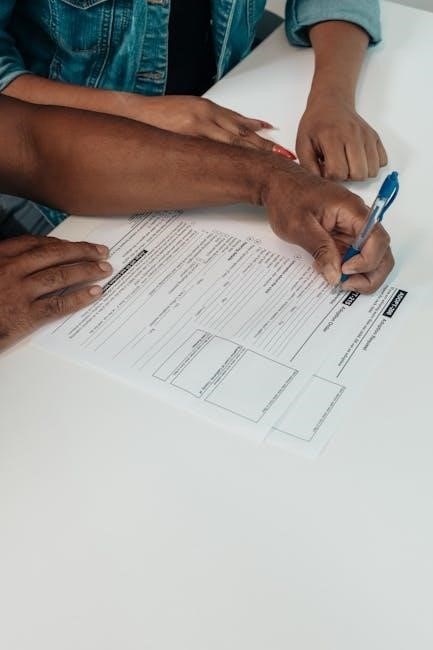
A Tutorial Request Form (TRF) is a structured document students utilize to formally request assistance with academic challenges. It’s more than just asking for help; it’s a deliberate process designed to pinpoint specific areas of confusion.
The primary purpose of a TRF is to facilitate a focused, collaborative tutorial session. It encourages students to articulate their difficulties, identify the source of their struggle, and prepare for a productive inquiry. This proactive approach shifts the learning dynamic, empowering students to take ownership of their understanding.

Furthermore, the TRF serves as a communication bridge between the student, tutor, and teacher, ensuring everyone is aligned on the learning goals. It’s a key component in fostering a culture of inquiry and academic support.
The Role of TRFs in AVID Programs
Within AVID (Advancement Via Individual Determination) programs, Tutorial Request Forms (TRFs) are central to the collaborative learning model. They aren’t simply paperwork, but a cornerstone of the AVID tutorial process, designed to cultivate critical thinking and communication skills.
TRFs encourage students to move beyond surface-level understanding and engage in deeper inquiry. They promote self-advocacy, requiring students to identify their specific academic needs and articulate them clearly. This process mirrors the skills needed for success in college and beyond.
The TRF also fosters a peer-to-peer learning environment, where students learn to both ask for and provide constructive feedback, strengthening their collaborative abilities.

Key Components of a TRF
Essential TRF elements include the subject, essential question, the student’s initial question, source material, and key academic vocabulary for focused tutorials.
Subject and Essential Question
Identifying the Subject is the foundational first step when completing a Tutorial Request Form (TRF). This clearly defines the area of study where the student needs support, such as mathematics, history, or English.
Alongside the subject, the Essential Question provides crucial context. This isn’t simply what the student is confused about, but the overarching question the coursework aims to answer.
The essential question frames the learning objective and guides the tutorial focus. A well-defined essential question ensures the tutorial remains targeted and productive, addressing the core concept rather than peripheral details. It provides a clear direction for inquiry.
For example, in a history class, the subject might be “The Civil War,” while the essential question could be “What were the primary causes of the American Civil War?”
Initial/Original Question & Source
The Initial/Original Question section of the Tutorial Request Form (TRF) requires students to articulate their specific point of confusion in their own words. This isn’t a restatement of the essential question, but a personalized expression of what’s unclear.
Crucially, students must also identify the Source of their confusion – where did they encounter the challenging material? This could be a textbook, a lecture, a class assignment, or online resource.
Providing the source allows tutors to directly address the context of the student’s difficulty. A clear source also demonstrates the student’s effort to understand the material independently before seeking help.
For instance, “I don’t understand how to apply the quadratic formula (initial question) from page 150 in the textbook (source).”
Key Academic Vocabulary
The Key Academic Vocabulary section of the Tutorial Request Form (TRF) is critical for focused tutorial sessions. Students identify 3-5 terms central to their confusion, demonstrating pre-tutorial thought.
These aren’t simply definitions, but terms the student struggles to apply or understand within the context of the subject matter. This section highlights specific language barriers.
Including academic vocabulary ensures the tutorial addresses core concepts and avoids getting lost in tangential issues. It also prepares the tutor to assess the student’s understanding.
Example: For a physics problem, vocabulary might include “velocity,” “acceleration,” and “projectile motion.” Accurate identification is key to a productive session.

Completing the Pre-Work Section
Pre-work on the Tutorial Request Form involves thoughtful preparation, including student thinking prompts and Cornell note beginnings, to maximize tutorial effectiveness.
Student Thinking Prompts
Student thinking prompts are crucial for initiating the pre-work phase of the Tutorial Request Form (TRF) process. These prompts encourage students to deeply consider their areas of confusion before the tutorial session even begins.
Effective prompts guide students to articulate their initial questions, pinpoint the specific source material causing difficulty, and identify key academic vocabulary that requires clarification.
This self-reflection is vital; it transforms the tutorial from a passive reception of information into an active, collaborative inquiry. By thoughtfully responding to these prompts, students arrive prepared to engage meaningfully with their tutor and peers, maximizing the learning potential of the session.
Cornell Notes Preparation
Cornell Notes are a cornerstone of the Tutorial Request Form (TRF) process, serving as a structured record of learning both before and during the tutorial session. Students are expected to prepare a page of Cornell notes as pre-work, demonstrating initial understanding of the topic.
This preparation involves dividing the note page into distinct sections: notes, cues, and a summary area. During the tutorial, students continue adding to these notes, capturing key insights and clarifying points of confusion.
The Cornell Note format facilitates active listening, organized thinking, and effective review, ultimately enhancing comprehension and retention of the material.
Identifying General Concepts
Before diving into specific questions, students utilizing a Tutorial Request Form (TRF) must first identify the broader, overarching concepts related to their area of difficulty. This step moves beyond surface-level confusion to pinpoint the fundamental principles at play.
This involves recognizing the “big picture” and how the challenging topic connects to previously learned material. Identifying these general concepts provides a crucial foundation for formulating focused inquiry questions.
Successfully pinpointing these concepts allows for a more productive and targeted tutorial session, ensuring efficient use of collaborative time and deeper understanding.
The Tutorial Session Itself
During the tutorial, students engage in a collaborative inquiry process, utilizing three-column notes to document questions, insights, and the steps taken to understand concepts.
Collaborative Inquiry Process
The collaborative inquiry process is central to a successful tutorial session, shifting the focus from teacher-led instruction to student-driven discovery. Students aren’t simply told the answer; instead, they work with peers – AVID tutors – to unravel their academic challenges.
This involves posing clarifying questions, sharing existing knowledge, and actively seeking solutions together. The tutor’s role isn’t to provide answers directly, but to guide the student’s thinking through probing questions and encouraging deeper exploration of the original problem.
This method fosters critical thinking, problem-solving skills, and a sense of ownership over the learning process, ultimately leading to more meaningful and lasting comprehension.
Three-Column Note-Taking (Question/Notes/Steps)
Three-column note-taking is a structured method employed during the tutorial session to capture the collaborative inquiry process. Students divide their notebook paper into three distinct columns: ‘Question,’ ‘Notes,’ and ‘Steps’ (or ‘Process’).
In the ‘Question’ column, students record the specific questions arising from their initial confusion. The ‘Notes’ column documents facts, examples, and explanations discussed during the tutorial. Crucially, the ‘Steps’ column outlines the process used to arrive at understanding – the logical sequence of reasoning.
This format encourages active listening, synthesis of information, and a clear record of the problem-solving journey.

Post-Tutorial Reflection
Post-tutorial reflection involves in-class activities where students analyze their notes, assess their learning, and solidify understanding gained during the inquiry session.
In-Class Reflection Activities
In-class reflection is a crucial component following a tutorial session, designed to consolidate learning and promote metacognitive awareness. Students actively engage with their three-column notes, identifying key takeaways and areas still needing clarification.
Activities often include summarizing the inquiry process, explaining the steps taken to resolve the original question, and evaluating the effectiveness of the collaborative discussion.
Furthermore, students might analyze how the tutor’s guidance impacted their understanding and pinpoint specific examples from the session that were particularly helpful. This process reinforces learning and prepares students for future academic challenges.
Analyzing Notes from the Inquiry
Analyzing notes post-tutorial involves a deep dive into the three-column format – Question, Notes, and Steps – to assess the learning journey. Students meticulously review their Cornell notes, identifying patterns, connections, and lingering uncertainties.
This analysis extends to evaluating the clarity and accuracy of the information gathered during the inquiry, and how effectively the collaborative process addressed the initial question.
Students pinpoint specific facts or examples that illuminated the concept, and critically examine the steps taken to reach a resolution, solidifying their understanding and promoting independent learning.

Example TRF Breakdown

Sample TRFs demonstrate the ‘Before, During, After’ structure, showcasing quote integration and detailed pre-work, inquiry notes, and post-tutorial reflections for clarity.
Sample Quote Integration
Effective TRFs often include direct quotes from the source material that sparked the student’s initial confusion. This isn’t simply copying; it’s identifying the precise text causing difficulty;
The example quote should be carefully selected and included within the ‘Initial/Original Question & Source’ section of the form. Students then analyze why this specific passage is problematic.
During the tutorial, the quote serves as a focal point for collaborative inquiry. Tutors and students dissect the language, context, and underlying concepts.
Post-tutorial, the student reflects on how the discussion clarified the quote’s meaning, demonstrating a deeper comprehension of the material and improved analytical skills.
Understanding the ‘Before, During, After’ Structure
The Tutorial Request Form (TRF) process is strategically organized around a “Before, During, After” framework, maximizing learning impact. “Before” involves pre-work – identifying the problem and completing Cornell notes.
“During” encompasses the collaborative tutorial session itself, utilizing three-column note-taking to document the inquiry process and potential solutions.
“After” focuses on post-tutorial reflection, where students analyze their notes and articulate their newfound understanding.
This structure ensures students aren’t passively receiving answers, but actively engaging with the material, fostering critical thinking and independent learning skills.

TRF Templates and Resources
Numerous template options are readily available for Tutorial Request Forms, alongside helpful online guidance to support students and educators alike.
Resources like MVUSD AVID provide instructional videos demonstrating how to effectively complete and utilize these crucial learning tools.
Available Template Options
Tutorial Request Form templates vary, but generally include sections for subject, essential question, original question, and source material.
Willowridge High School provides a two-page communication document as an example, showcasing a structured format for student requests.
These templates often incorporate spaces for key academic vocabulary, pre-work completion details, and areas for tutor notes during the session.
Digital formats, like those found through online AVID resources, allow for easy distribution and electronic submission, streamlining the process.
Customizable templates empower teachers to tailor the form to specific curriculum needs and student learning styles, maximizing effectiveness.
Online Resources for TRF Guidance
MVUSD AVID offers valuable video tutorials on filling out Tutorial Request Forms, with recent uploads from December 2025 and January 2026 demonstrating the process.
These resources, available on platforms like YouTube, provide step-by-step guidance for students and educators alike, clarifying each section of the form.
Searching “How to Fill Out a Tutorial Request Form” yields helpful videos, including a comprehensive guide from September 24, 2021.
AVID’s official website likely hosts additional resources, including sample forms and best practice documents for implementing TRFs effectively.
Exploring these online materials ensures consistent understanding and proper utilization of the TRF process within AVID programs.

Best Practices for Effective TRFs
Effective TRFs require clearly defined questions and detailed note-taking during tutorials, ensuring students actively engage with the material and learning process.
Clear and Focused Questions
Crafting precise questions is paramount for a productive tutorial. Avoid vague inquiries like “I don’t understand this chapter.” Instead, pinpoint specific areas of confusion. For example, “I struggle to apply the quadratic formula when ‘a’ is negative; can we review that step-by-step?”
A focused question guides the tutor and ensures the session remains targeted. The question should demonstrate initial effort from the student – showing what they’ve already tried. This isn’t about seeking answers, but understanding how to arrive at them.
Well-defined questions maximize tutorial time and promote deeper comprehension, leading to improved academic performance and self-reliance.
Detailed Note-Taking Strategies
Effective note-taking during tutorials is crucial for solidifying understanding. Employ the three-column note-taking method: Questions, Notes, and Steps/Process. In the ‘Question’ column, restate the point of confusion. The ‘Notes’ column captures explanations and examples from the tutor.
The ‘Steps/Process’ column details the problem-solving approach. Cornell Notes are also valuable, summarizing key ideas and formulating further questions. Record concrete examples and avoid simply copying information.
Detailed notes become a personalized study guide, facilitating independent review and reinforcing learning. Regularly revisit and refine these notes for optimal retention.